
Grocery Store Overload & The Frozen Food Truce
Ever since I moved to the States, I’ve noticed the amount of goods that spring from every aisle in the grocery stores – And the insane amount of different stores selling -to my untrained eye- the same things. Every time we go for errands, my girlfriend, used to this kind of stimulus, discreetly leans towards me to slide the idea of going to at least three stores to get the goods needed. “We need our toiletries from Target and the snacks from TJ’s”. But there is one thing she started to retreat from, that I consider a personal victory: Frozen Foods.
Meeting The In-Laws (And Cooking Anyway)
When I first met my in-laws, I was very nervous about it. I am a shy guy from the other side of the world, coming into a traditional North Carolina household to take their daughter and probably ending up living somewhere far away from there. Right now, it’s California, but I suspect it will be changing a lot. On one of the first days, my girlfriend insisted that I cook for them. Apart from being American, they are vegan, so they are somewhat prisoners of the hydrogenated packaged goods used to replace otherwise natural emulsions. I successfully perused through their pantry to try and find some actual canned tomatoes among all the different versions of Rao’s. I succeeded. I whipped up an effortless tomato sauce -Tuco- which is what we call it in Argentina- to a tomato sauce that has anything in it. Maybe(? Thanks to my little nit-picking attitude, I managed to impress my girlfriend’s parents and continued on that path with at least one element in my favour: Actual food.
How It Worked Back Home
When I was in Argentina, it was easy to live this way. The options were reduced: you either cook or order takeout. It is true, we have a big culture of homemade food; Virtually every highly recommended restaurant in Buenos Aires is a -bodegón- A places that intales an aura solely described by shitty looks but tasty food. Living in the city, at least in Buenos Aires, makes things easy. Every block has its butchery and vegetable store. Going to big grocery stores is reserved for purchasing hygiene products or beverages. It is not impossible to find frozen and processed foods in the aisle, don’t get me wrong, it is still a Western developed country where I grew up having Oreos for breakfast, but un-branded meats and vegetables are still the stars of the show.
My Personal Rule: As Few Packages As Possible
When I moved in alone, I decided only to buy goods that do not come in packages (to the possible extent). There were exceptions based on availability and comfort. I was not going to drive 300 kilometers to the olive region to get a jug of untreated olive oil or to Suipacha to get fresh goat cheese curds. That was out of the question. But overall, it worked well for me. You can cook a whole spectrum of things with just the essential meats and vegetables, if you know how to pair them.
Why Homemade Still Wins
I guess the fact that I studied the craft of cooking helps me understand and visualize how easy it is to make from scratch things often offered on the counters as “time-saving” alternatives for chopping an onion and/or marinating a piece of chicken.
This intake philosophy became more challenging when I moved to the United States. My girlfriend slowly started showing me the wheel of goods offered in the different stores; their various flavours, colours, and textures were out there to grab. The simplicity of everything struck me. You pay, you heat up, you eat. It is quick, easy, and most of the time, tasty. However, there is a better way, and now that she has tried it, there is no going back.
“I don’t have time”; “I don’t know how to”; “The packaged ones are just the same” this is just some of the -more than valid- excuses that I hear when I talk about this in a lot of my circles. It is true that time and knowledge are on my side, and I am not here to pass judgment on anyone. However, I strongly think that in most cases, eating homemade food is better, tastier, and probably healthier; and, although it is not faster, I can assure that with proper techniques and time management, there are a whole lot of things that anyone can cook up in around 30 minutes.
Weekly Essentials To Restock
Vegetables
- Vegetables: Onion, carrots, celery, garlic, peppers, salad greens, tomatoes (fresh and canned -preferably San Marzano-), lemons, and fresh herbs
Meats
- Meats: Ground beef, a good roast, bacon, boneless chicken thighs, white fish filets, raw shrimp, and canned tuna.
Dairy
- Dairy: Soft cheese, hard cheese, milk.
The fats
- The fats: Olive oil, vegetable oil, and butter.
The dries
- The dries: Dry pasta, flour, rice, and spices*
Add-ons
- Add-ons: Mustard, Olives, cheap red and white wine, and tomato paste.
About Spices (And Why I Skip Mixes)
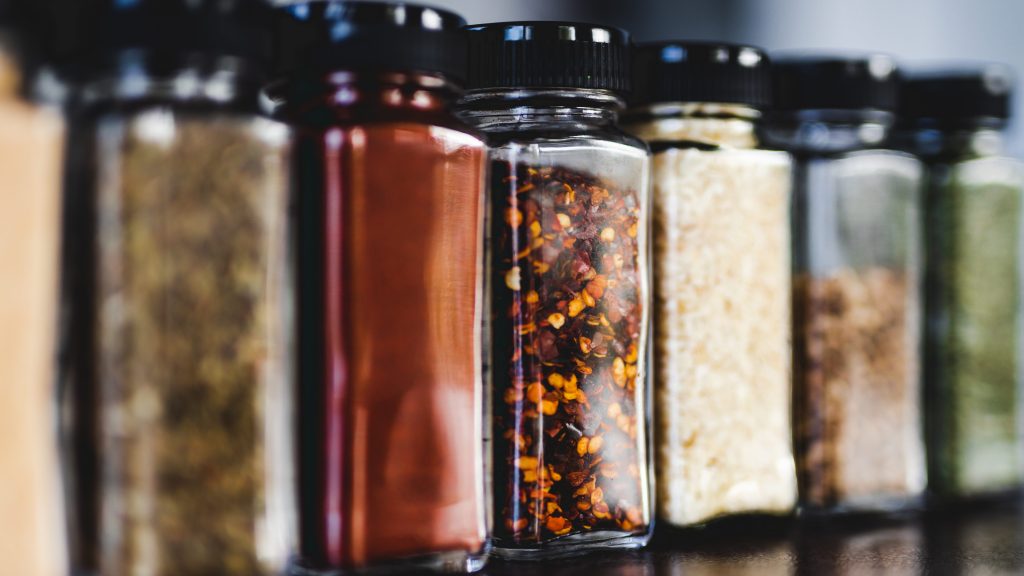
*When I say spices, I don’t like to specify because it is a realm that comes from personal taste. I encourage myself and everyone around me to buy every spice they can get their hands on. Keep in mind that I am not talking about flavoured salts or “Mediterranean mixes”. Spices are single products, and mixes usually take freedom out of making choices for one’s own flavor; there is no mix you can not make later on during the cooking process. In my kitchen, I always have: Salt, white and black pepper, bay leaves, dry oregano, nutmeg, cumin, paprika, fennel seeds, cloves, and cardamom.
I strongly oppose powdered onion and garlic, even though I know they are the holy grail of spices in American households. However, they can be helpful and even needed in a few cases, like frying batter.
If You’re Feeling Playful: Pantry Upgrades
- Vegetables: Ginger, green onions, fresh basil, mushrooms (any kind), eggplant, canned chickpeas.
- Meats: Lamb, Ground turkey.
- Dairy: Plain Greek yogurt.
- Fats: Sesame oil.
- The dries: Semolina, cornstarch, polenta, tortillas.
- Add-ons: Soy sauce, hot sauce, fresh cilantro, fresh basil, tahini, and aji-no-moto.
What Comes Next
With these bases (maybe not that basic anymore), I am going to try to deliver some recipes that can be cooked in between 30 minutes and an hour to prove to myself and whoever is reading that eating home-made food is easy, fun, and, overall, Tastier.
See ya!
 Marcos Waller