
Why Is Béchamel Essential?
In our last recipe, I encountered a problem mid-writing. I realized that the original and best way to prepare it would need the blessing of one of the culinary world’s most incredible inventions: a béchamel sauce.
The béchamel sauce is one of the four mother sauces of French gastronomy and maybe the only one worth using in home cooking. This sauce not only brings us the possibility of a savoury base for thick sauces and incredible fillings, but it also embodies a formula that can be used to thicken any liquid medium, giving us the perfect tool to make hearty soups and gravies.
The formula in question is Roux + Liquid = Love.
Important Notes for Success
- The roux and the liquid need to be opposite in temperature: if your liquid is boiling, your roux needs to be cold, and vice versa.
- There are three types of roux: white, blonde, and brown. We will use them according to the final preparation we want to achieve.
- For a good béchamel sauce, I infuse my milk (bring to a boil from scratch) with half an onion, some cloves, and a bay leaf. This is optional.
- The thickness of the sauce depends on the percentage of roux correlated with the liquid. 20% is used for a thick result (for fillings) and 10% is my go-to for a creamy sauce or soup.
Basic 10% Béchamel Sauce
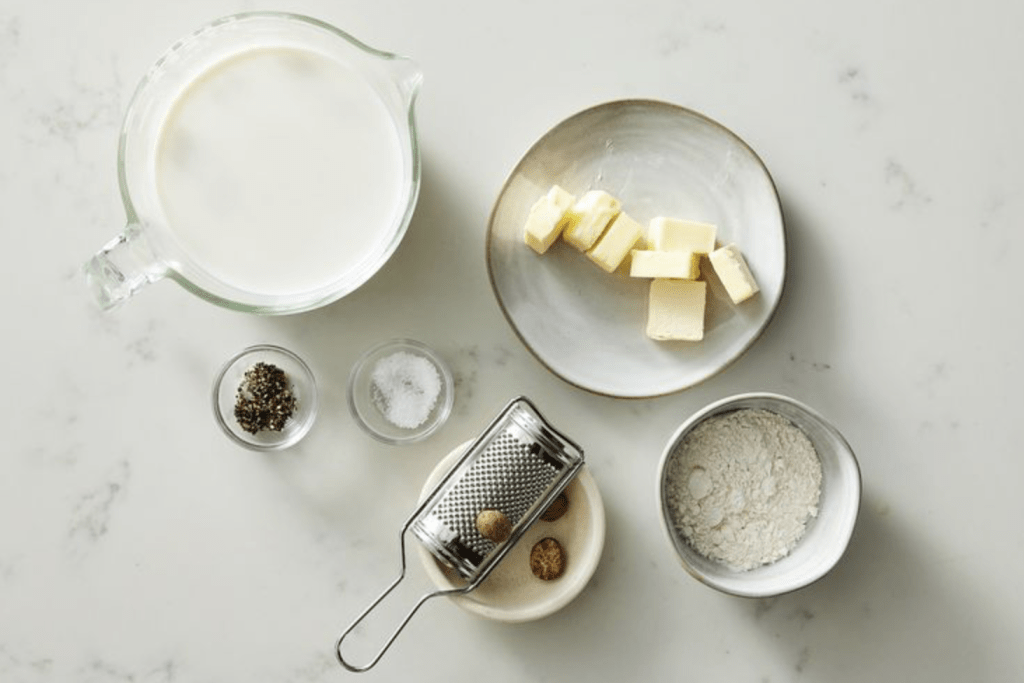
Prep Time: 0 minutes
Cooking Time: 10 minutes max
Ingredients
- 50 grams of butter
- 50 grams of flour
- 1 litre of milk
- Salt and nutmeg
Cooking Instructions
- Grab a saucepan and get everything ready around it.
- Put the butter in a pan and let it melt over medium heat. Once melted, add your flour and incorporate it with a whisk. This is your roux; keep it white for this preparation.
- As soon as it’s thoroughly mixed, start pouring your milk in small amounts, whisking constantly to prevent clumps. Repeat until all the milk is incorporated.
- Salt and add nutmeg to taste.
- Let it come to a boil on low heat. Once it breaks the boil, it’s ready.
- To preserve, keep plastic wrap in contact with the preparation.
Footnote
Everything in this sauce can be replaced with a vegan version easily found in American stores. Even though it is chemically possible, I do not recommend using vegetable oil or cornstarch for this preparation; that would be heresy.
Once you master the roux technique and fully understand its concept, you can use it for soups, sauces, and gravies, replacing the milk with any other liquid medium such as stock, broths, or juices.
Final Thoughts
Now tell me, have you ever made a béchamel sauce or used a roux in any other preparation?
 Marcos Waller
Leave a comment